


By David Heighway, Hamilton County Historian Emeritus
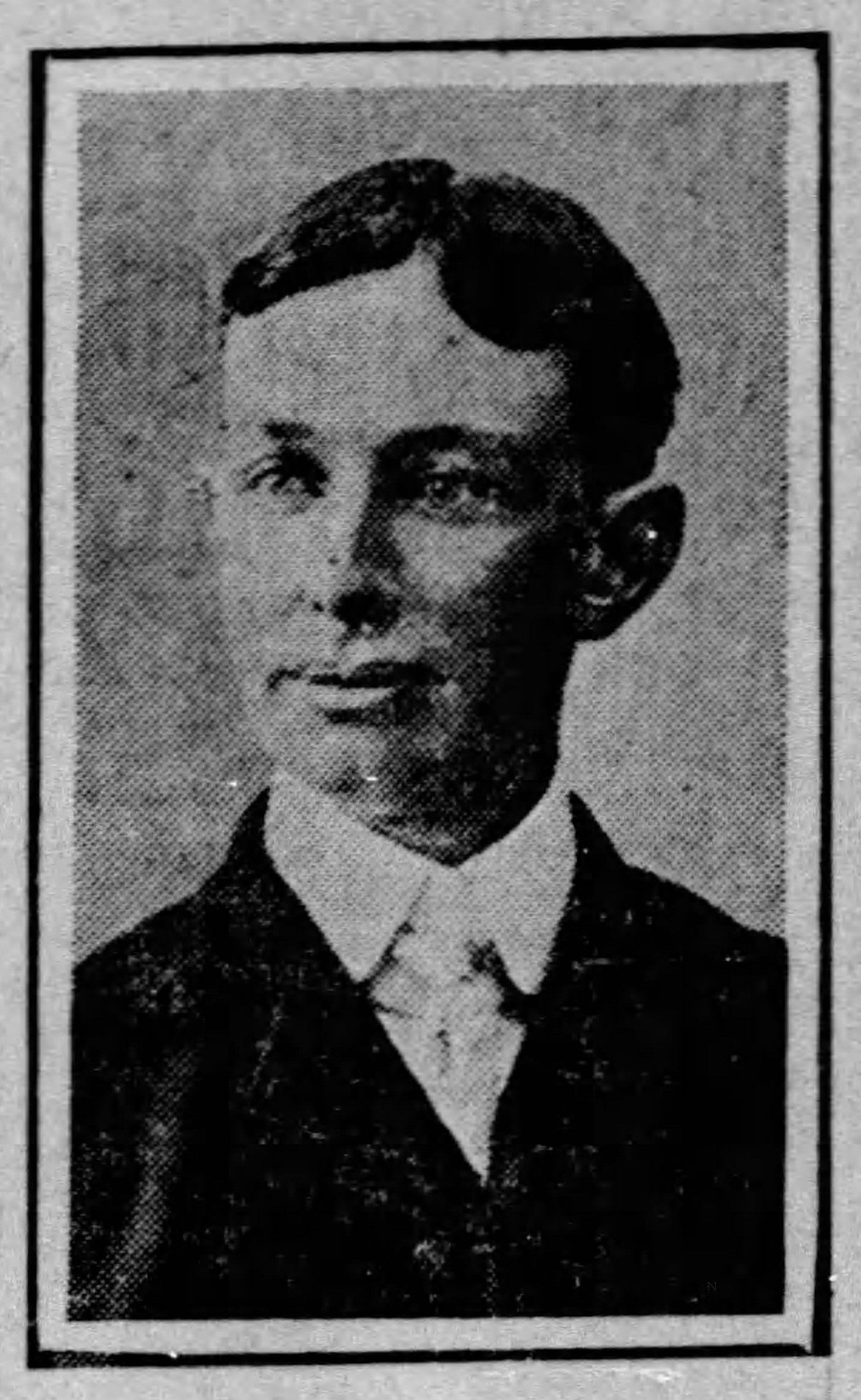
R. Walter Wilson. Image from The Muncie Star Press , 1-28-1906
When you look at the history of inventors in Hamilton County, occasionally a long-forgotten figure will emerge. One such person was R. Walter Wilson, known as Walter or just R.W. He was born in 1873 to a Quaker family on a farm near Westfield. He was educated at Union High School and became interested in mechanical engineering. In 1904, he went to Mexico to work in the copper mining industry and then returned home after a year. When he came back, he had a new idea for an invention to produce what we now call green energy.
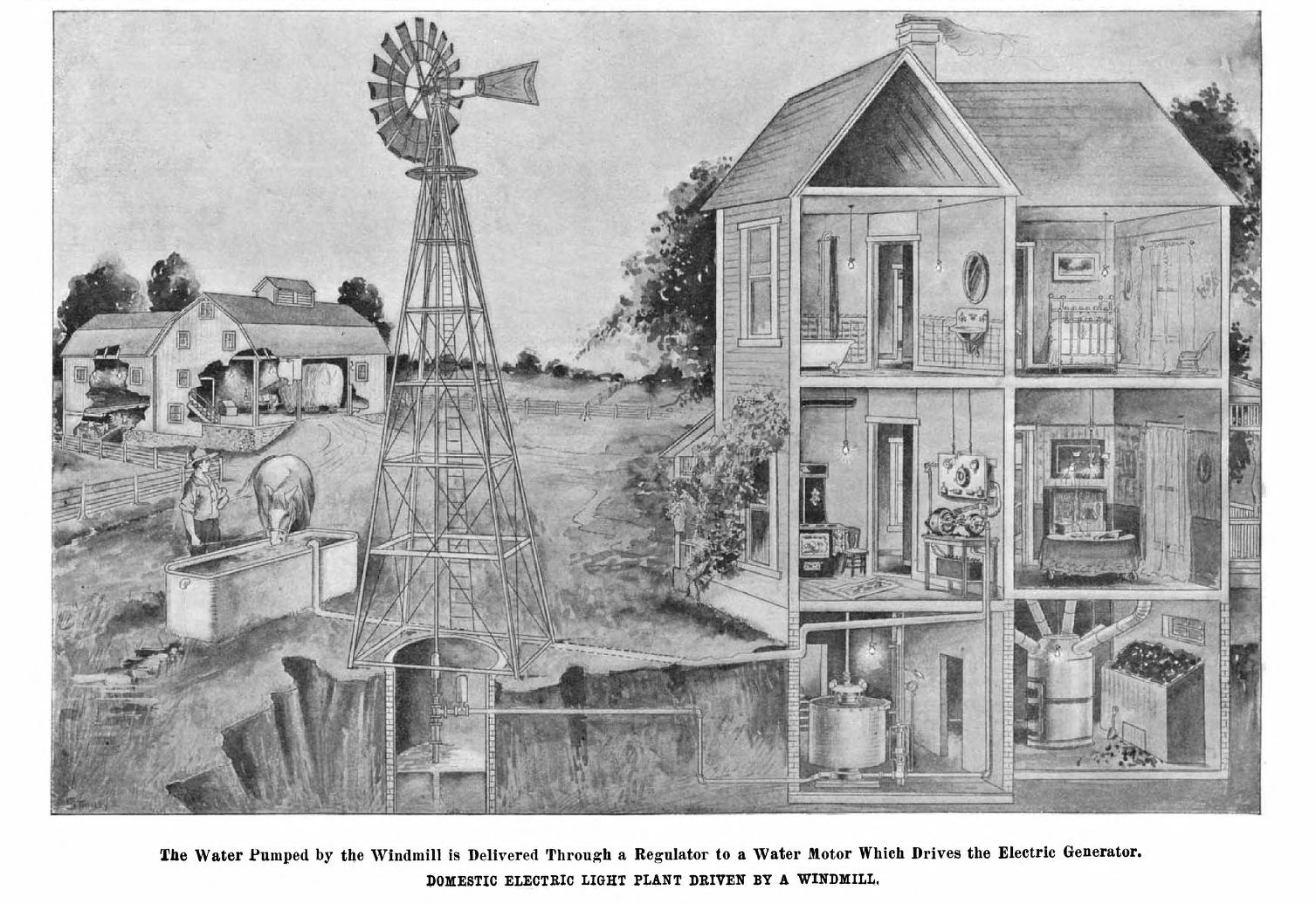
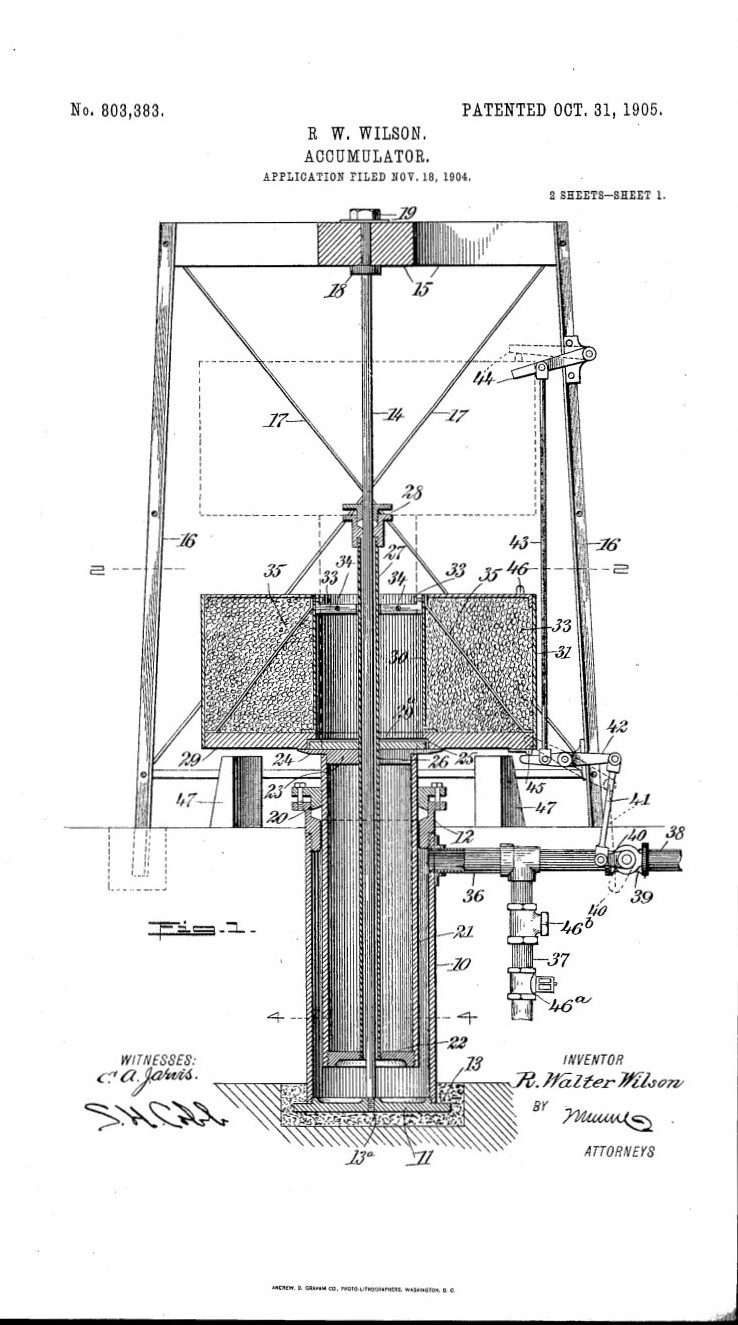
He was inspired by some of the machinery that he saw at the mines, and in 1905, Wilson created a system to get steady electrical power from windmills. Ordinarily, a windmill doesn’t run at the consistent speed required by a dynamo. (Now we can use computers to deal with this.) His system was mechanical and based on the flow of water pumped by a windmill into a water tank and then released at a steady pace. There was a battery bank which would be steadily recharged to provide power when the wind wasn’t blowing. A key part of the system was a device called an “accumulator” in the patent application and called “Wilson’s Patent Hydraulic Regulator” in media reports.
Diagram of Accumulator from Wilson’s patent
“My invention relates to apparatus for storing energy and regulating its application, it being particularly adapted for use in connection with such motors of irregular speed such as windmills which are applied to the pumping of water. Its principle objects are to provide automatic means for controlling the reception and delivery of energy by the accumulator and to generally improve the construction of apparatus of this class.” – from the October 31, 1905 patent description for the accumulator.
He built his first working example in Westfield. There was extensive media coverage on this in newspapers and magazines, reaching as far as England and Spain. The magazine Technical World said in the March 1906 issue, “This simple harness, once put in operation, will virtually run itself, requiring little or no attention. Mr. Wilson demonstrated the success of the invention at his own shop in Westfield, which is brightly lighted with wind-made electricity, and to all appearances it equals the steam-made product that city folk enjoy.”
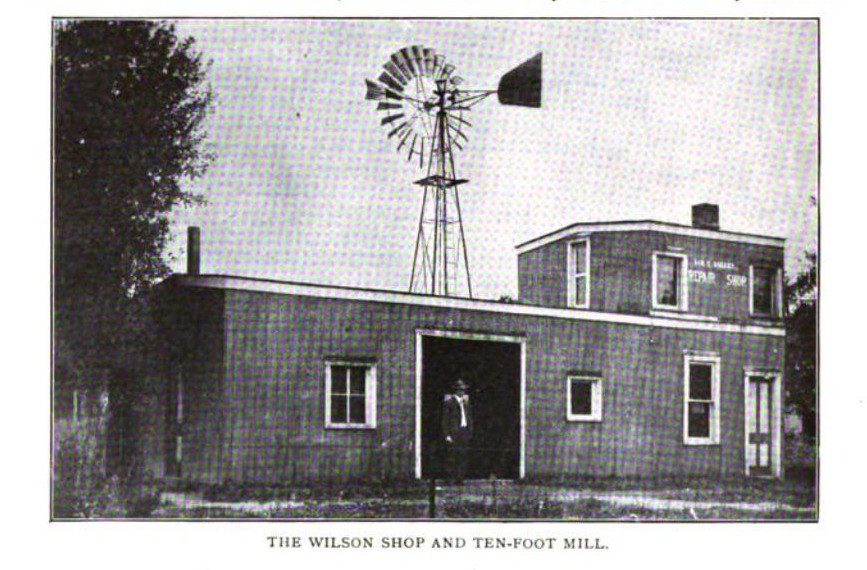
The Wilson Shop and Ten Foot Mill from Technical World, March 1906 issue.
The magazine Our Day said in December of 1906, “There is no doubt that Mr. Wilson has solved the problem of a steady light, and that, with his invention, houses and barns supplied by it can be lighted for three or four days at a time even if there is a dead calm and the windmill does not make a single revolution.”
An article in Scientific American on June 1, 1907 was a little more skeptical: “…Mr. R. W. Wilson of Noblesville, Ind., seems to have reached a successful solution of the question, at least as far as the requirements of his own home are concerned…”
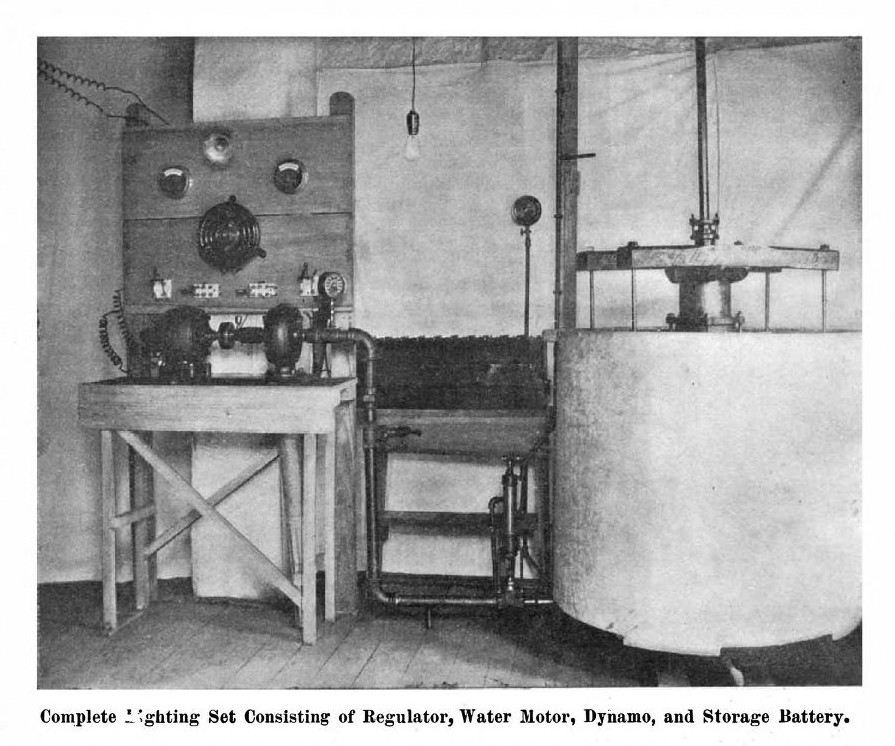
Complete lighting set featuring regulator, water motor, dynamo, and storage battery from Scientific American, 6-1-1907
In February of 1906, a larger working example with a 50-foot tower and 14-foot wheel was built in Noblesville on North Ninth Street. A company was formed in June called The Wind Mill Electric Company, (capital stock $20,000), for the purpose of manufacturing this system. The Columbia Electric Company, which made automobile parts, announced in July that it would build a factory in Noblesville using Wilson’s system for power. Wilson applied for a Canadian patent for the accumulator in October which was granted in March of 1907. He was married in September, so 1906 was a good year for him.
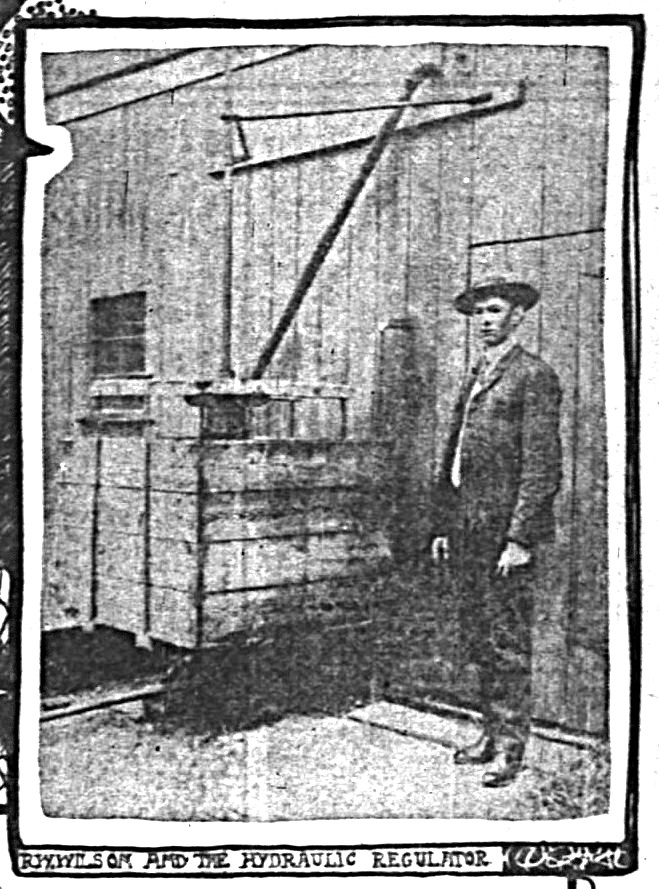
R.W. Wilson and the hydraulic regulator from The Indianapolis News, 11-11-1905
However, the company apparently didn’t work out. Wilson and his wife moved to Los Angeles, California in December of 1906, ostensibly to promote his invention. The Columbia Electric Company built their factory in Knightstown instead of Noblesville. So, was it a technical failure of some kind? Financial? Marketing? Or maybe like some tech start-ups today, he was too far ahead of the curve, and there was not enough demand. A British magazine called Engineering did an October 26, 1906 article on the system and said, “… it seems a very roundabout method of obtaining ½ horsepower, particularly where petroleum is cheap and oil-engines are not unknown.”
R. W. Wilson remained in Los Angeles for the rest of his life. His move to the west brings up the intriguing possibility that a Hamilton County man may have been the first person to bring wind-powered electricity to California. Whatever the result, it was an interesting early attempt at green energy.