


By David Heighway, Hamilton County Historian Emeritus
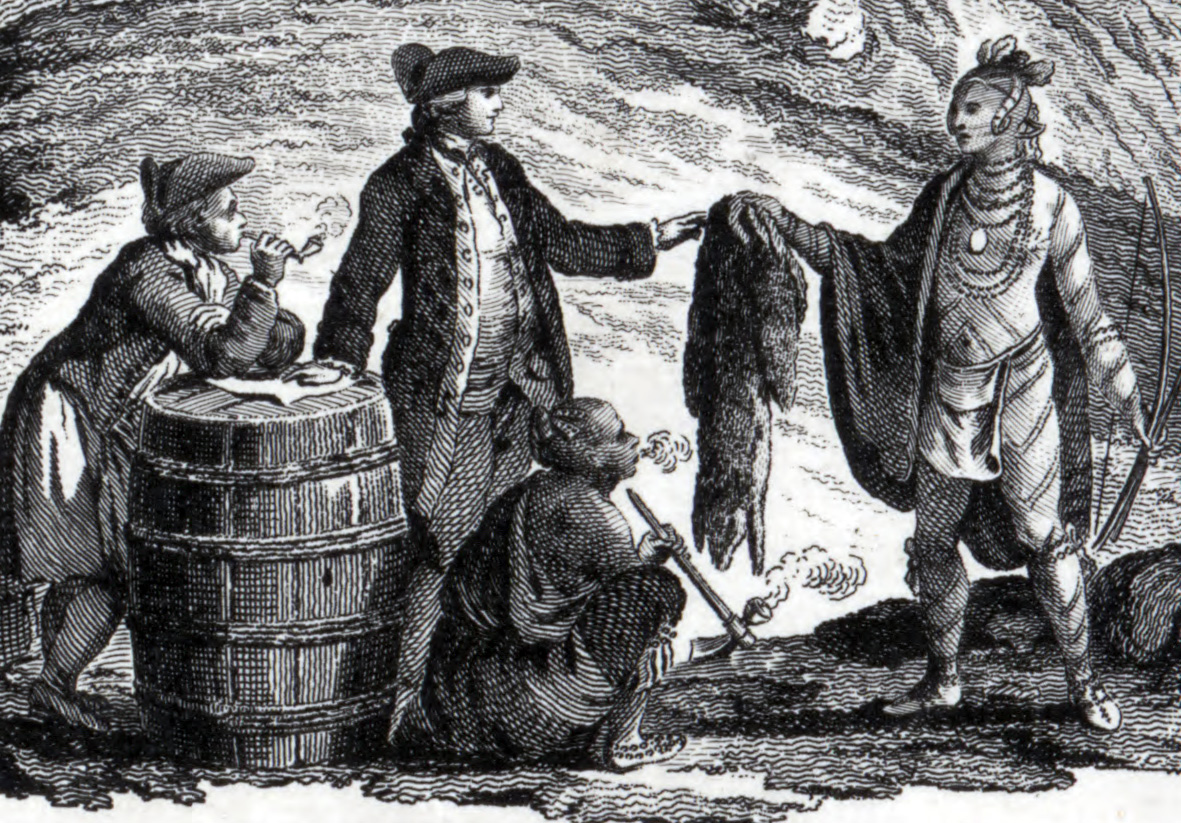
When it comes to business models, the simple exchange of one item for another is about as basic as it gets. For close to a century, from around 1717 to around 1820, this kind of activity is what powered the economy of the area that would become Hamilton County. The fur trade was the first known business and the root of all that came afterward.
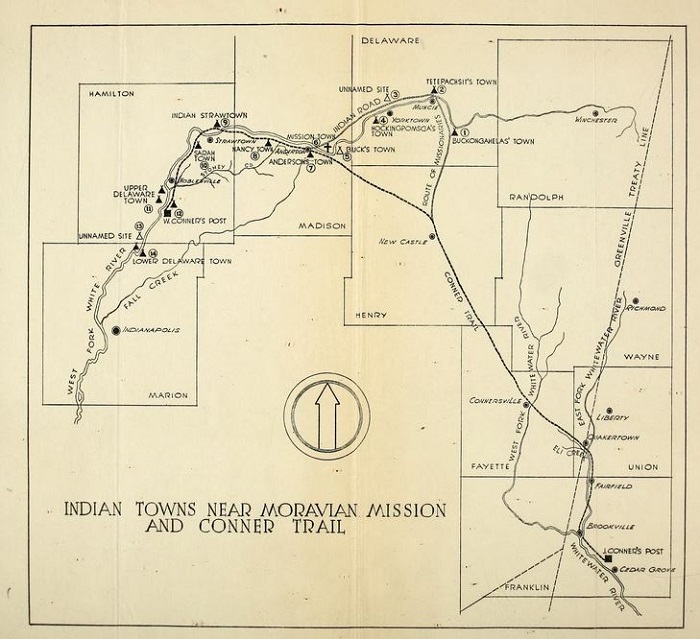
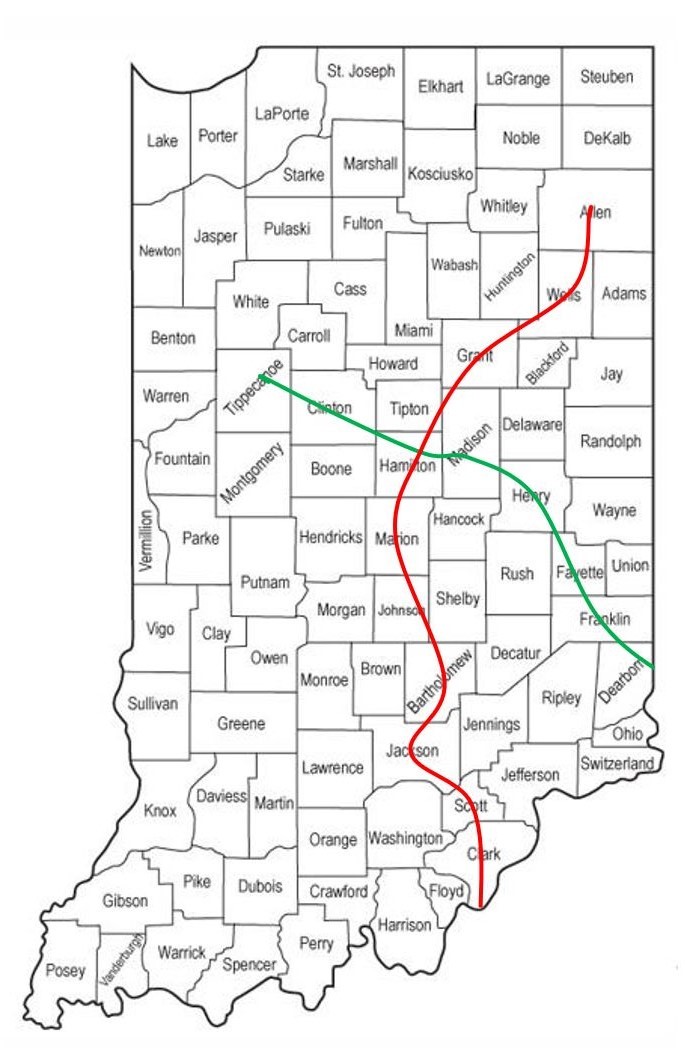 The aboriginal residents and the first European traders both came in the area in the same way – via the trail from the Ohio River to the Wabash River that was later known by the name of the Lafayette Trace. At the site now known as Strawtown, it intersected with a trail that ran north-south between the Falls of the Ohio and the area of present-day Fort Wayne.
We know little about the trading in the area until the establishment of Fort Ouiatenon in 1717 at the head of the northern end of the Lafayette Trace. Interestingly, the first European traders in the Hamilton County area that we know of were probably from Vincennes. They were the Brouilettes, a French family that received a license to trade with the Miami Indians in 1801. This apparently included the Delaware Indians who had obtained permission from the Miamis in the late 1700s to settle in the area after being pushed from their homes in the east.
The Brouilettes (also spelled Bruett, Bullett, Bennett, etc.) established a trading post at the Delaware village on the site of present-day Strawtown. This was a prime spot, as this was the largest village in the area. The family also established a post at what was known as Lower Delaware Village, which was roughly where 96th Street crosses White River today. (In a sense, you could say they were the first Castleton merchants.) Members of the family – John Brouilette and his half-Delaware wife, Barbara – stayed in the county until the 1820s and owned property in the area that would become Carmel.
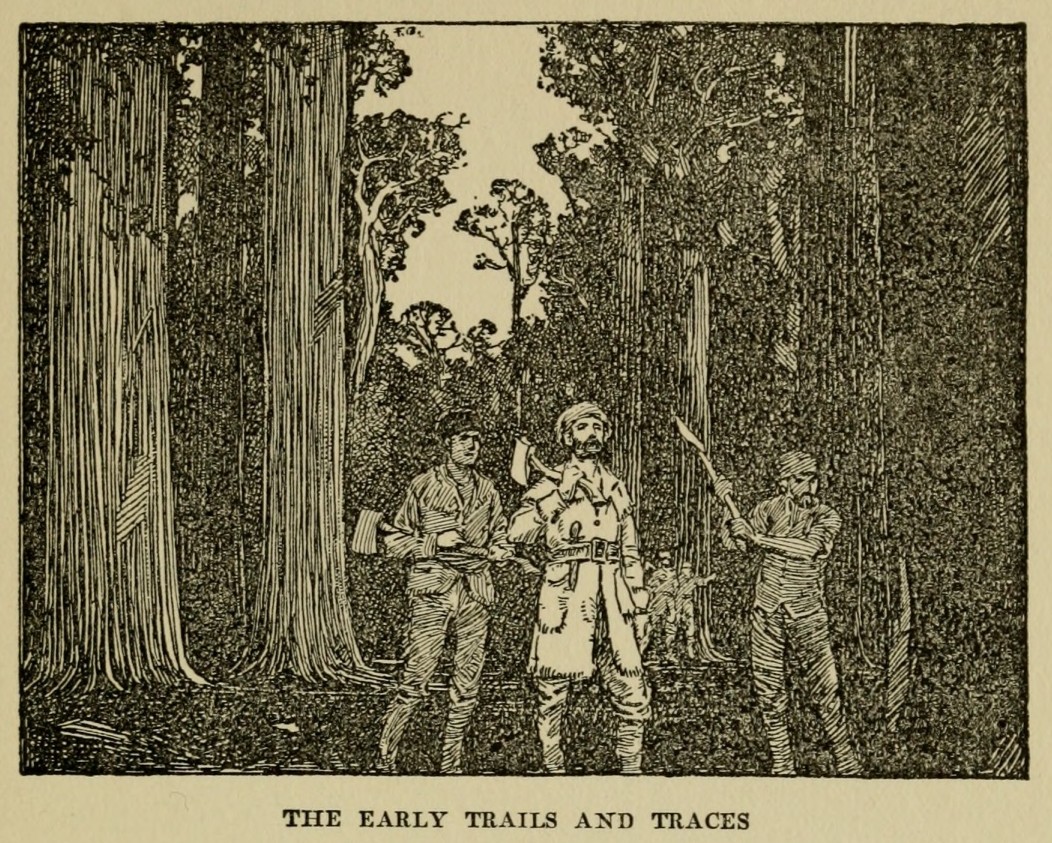
“Once upon a time in Indiana” by Charity Dye, 1916; illustration by Franklin Booth
The trader who came into the area and became the most well known was William Conner. He arrived in 1802 and established his post on a ford in the river that is the site of the Conner Prairie museum today. Conner had established his credibility with the Indians by marrying a Delaware woman named Mekinges who was related to several tribal leaders. He was quite successful in his trading business.
The only other trader that we know lived in the area was Pete Smith – an African-American who lived with Indians at the site on White River where it is joined by Stoney Creek. We don’t know when he arrived, but it was sometime before 1819.
The activity that all of these people were involved in was the exchanging of various manufactured items to the Indians for animal pelts. The traders would offer utensils, cloth, metal knives, and other things. Some of these items have been found in the archeological work at Strawtown Koteewi Park. The Indians in return had pelts from nearly every kind of animal in the area – the most valuable being beaver.
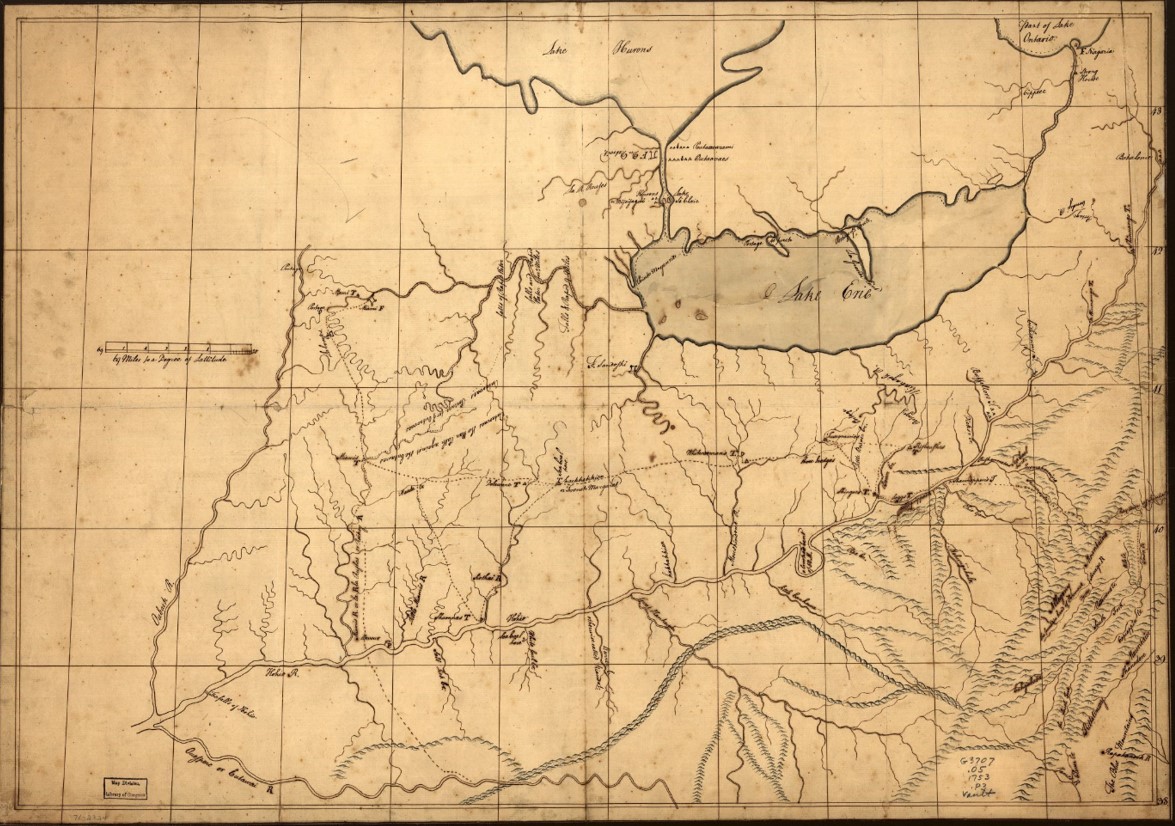
1753 Fur trader’s map of the Ohio Territory – Library of Congress
The Indians were very shrewd in their trading. Since most bundles of pelts were sold by weight, they would often not scrape all of the animal tissue from the skin side. This would sometimes be discovered when the pelts were inspected for quality. A key sign of quality was the color of the skin side. If the animal was killed in the proper season, a skin would be yellow – out of season, the skin would be blue. Generally, though, the skins prepared by the Indians were considered to be of superior quality to those prepared by Europeans.
We have some idea of prices from William Conner’s dealings with later trappers. In 1800s values, beaver skins were worth $1.00 to $1.25 a pound, while an entire deerskin was $1.00 for a male (a buck) and 67 to 75 cents for a female (a doe). A bearskin could be worth anywhere from $1.25 to $5.00, depending on quality. Fox, mink, and wildcat were 50 to 67 cents. Raccoons were very plentiful and were worth 37 ½ to 40 cents, but a good skin could bring $1.00. Muskrats were 25 cents, and weasels, ground hogs, and opossums – while used by the Indians in their clothing – had no trade value.
Sons of the Wilderness” by Charles Thompson, 1937
The fur trade in Hamilton County could be considered to have ended with the Treaty of St. Mary’s in 1818, in which the Indians agreed to move farther west and opened the area to white settlement. The Delaware were gone by 1822, removing one of the key sources of pelts. Mekinges went with them, and Conner married a white woman settler about three months after she left. The Brouilettes had already returned to Vincennes. Pete Smith was taken away by a man who claimed that Smith was his runaway slave. He was never seen again. Pioneers moved into the area and began clearing the forest for farming. The animal population dropped rapidly, with most of the larger animals gone by the 1860s. There was still some interest in hides and pelts. The first industry in Noblesville was Cogswell’s tannery, which was started in 1825. However, a changing economic base signaled the end of the opening chapter in the county’s history.