


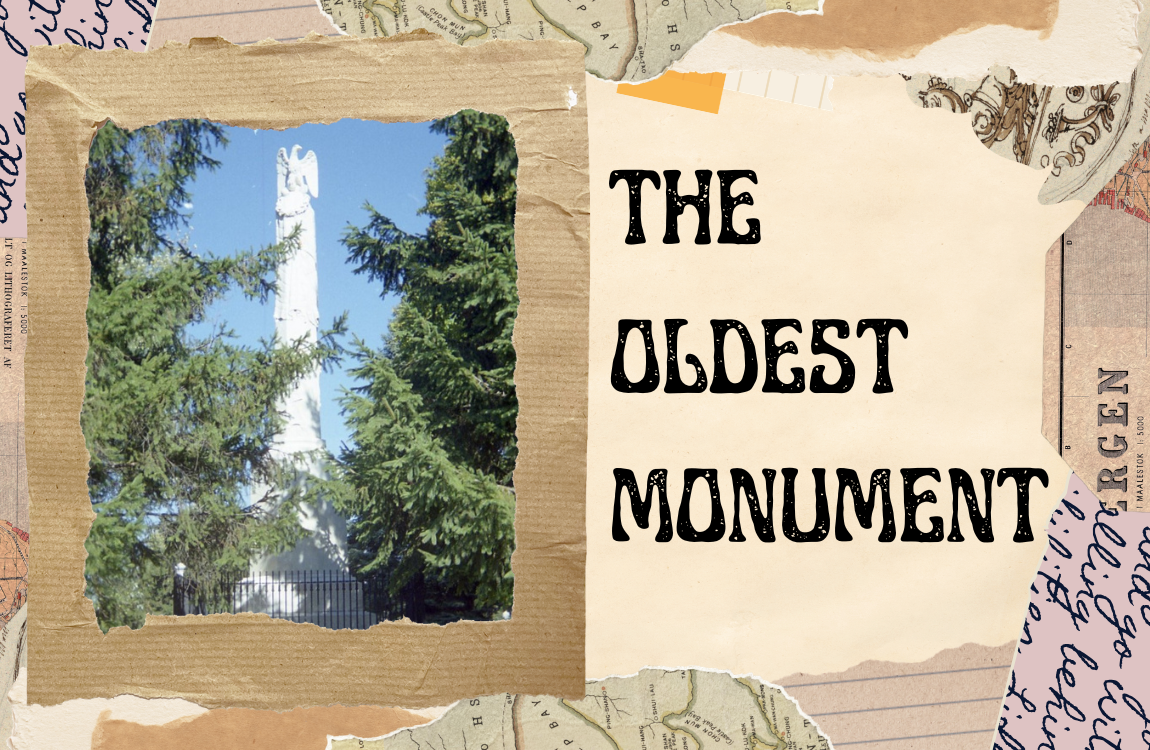
As part of my blog posts about Juneteenth, I’ve mentioned the African American soldiers listed on the monument at Crownland Cemetery. It raised the question “Is this the oldest Civil War monument in the United States that includes African American soldiers?” We don’t have an answer yet, but it is a fascinating search.
One of the issues is defining whether something is a monument or a memorial. The two terms are often used interchangeably. The obelisk at Crownland Cemetery would be considered a monument since many of soldiers listed on it were alive when it was installed and even attended the ceremony. The plaques on the west side of the Hamilton County courthouse would be considered memorials because they only list those people who were killed during the war. 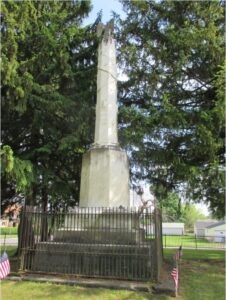
The monument at Crownland was erected in 1868, making it one of the oldest in the nation. According to Wikipedia, 11 Civil War monuments were erected before 1866 (including one in Princeton, Indiana), 10 in 1866, and 11 in 1867. Several communities constructed monuments when Memorial Day was established in May of 1868.
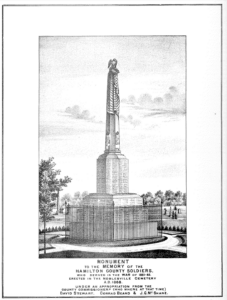 Monuments recognizing African American Civil War soldiers are very rare and trying to catalog them is often difficult. A monument in Wyandotte County, Kansas, from 1905 was only recognized and refurbished within in the last year. There are possibly eight monuments/memorials for Black troops that were erected in the United States before 1988.
There is one memorial that could be considered to predate the Crownland monument. In August of 1866, 175 men from the 56th USCI died in a cholera epidemic at Jefferson Barracks in St. Louis. A marble obelisk was placed in the section of the cemetery that contains their graves. While this is, in a sense, a private grave maker, it does give special recognition to their contribution to the war.
The other early monuments/memorials that recognize African American Civil War soldiers are:
- Memorial to Robert Gould Shaw and the Massachusetts 54th Regiment – Boston, Massachusetts – 1897
- “Known and Unknown Colored Soldiers and Sailors” – Wyandotte County, Kansas – 1905
- In Memory of the Colored Union Soldiers – Hertford, North Carolina – 1910
- West Point Monument (AKA Norfolk African American Civil War Memorial) – Norfolk, Virginia – 1920
- Colored Soldiers Monument (AKA Kentucky African American Civil War Veterans Monument) – Frankfort, Kentucky – 1924
- All Wars Memorial to Colored Soldiers & Sailors – Philadelphia, Pennsylvania – 1934
It would be appropriate to call the structure at Crownland “the oldest known public Civil War monument in the United States to recognize African American soldiers”. The designation becomes even more significant when you consider that the monument was planned by the veterans themselves. They were the ones who made the choice to acknowledge their Black comrades-in-arms. The African American soldiers listed on the monument are:
- W. Barley [William Bailey, Private, Co. A, 8th USCT]
- J. Hoard [John Hord, Private, Co. D, 8th USCT]
- F. Jenkins [Franklin Jenkins, Recruit, 28th USCT]
- R. Mondon [Ricks Mondun, Recruit, Co. F, 28th USCT]
- S. Outland [Stephen Outland, Private, Co. E, 28th USCT]
- J. Roberts [Junius B. Roberts, Corporal, Co. C, 28th USCT]
- J. A Roberts [John H. A. Roberts, Recruit, 28th USCT]
- C. A. Roberts [Charles A. Roberts, Recruit, Co. F, 28th USCT]
- N. Locklayer [Nelson Locklayer, Private, 28th USCT]
- C. White [Charles White, Recruit, 28th USCT]
- J. Mitchell [John Mitchell, Private, Co. F, 28th USCT]
The names are carved on the lower part of the front of the obelisk which faces south. There were around 40 local African American Civil War soldiers that were not listed and people are now discussing the possibility of adding a plaque nearby to include their names. 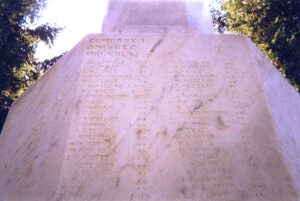
There is also a new project in the works to do restoration work on the monument. The photo at the top was taken around 20 to 25 years ago after the last time it was cleaned. At that time, the monument looked bright and inspiring. However, it has become weathered in the intervening years and needs help. Local history writer Kevin Yaney is starting an effort to do a restoration which we will hear more about in the coming year.
Hopefully the monument’s distinction as one of the first efforts to recognize the African American contribution to the Civil War will inspire people to support the restoration project. This is something that Hamilton County can be proud of.
Past Juneteenth Blogs: