


By David Heighway, Hamilton County Historian Emeritus
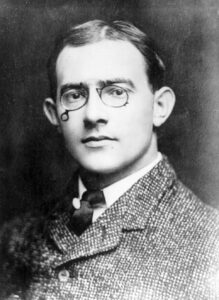
Carl G. Fisher
Carl G. Fisher (1874-1939) was a man who knew how to get his name in front of the public. He was one of the founders of the Indianapolis Motor Speedway, as well as the leader in the creation of the Lincoln Highway, the Dixie Highway, and Miami Beach. However, before he did all of that, he was an automobile salesman in Indianapolis who was looking for a way to sell cars at a time when people weren’t even sure if they would run reliably. Over a century ago, he used Hamilton County as a testing ground for some vehicles and gave the local people a look at the future of transportation.
In 1901, he had a successful business in Indianapolis selling bicycles and automobiles which he promoted by doing outlandish stunts. One of these involved dropping a bicycle off of the then-tallest building in Indianapolis. Another involved attaching an automobile to a hot air balloon and floating it across the city. He would later repeat the bicycle stunt, but with an automobile, which he launched from a smaller building and allegedly drove away after it landed. While these stunts attracted attention to the business, they didn’t do much for showing that cars were practical.
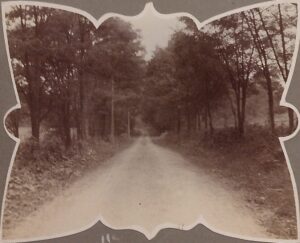
Millersville Pike Brooks
Endurance runs were usually the best way to prove the worth of an automobile, and, in 1901, a run could be done on any road. This was an era when a gravel road was considered an improved road. Fisher decided to do a race to compare three kinds of automobiles. He chose July 23rd as the date and Noblesville as the turn-around spot. The cars would travel via the small town of Millersville, (now 56th Street and Emerson Avenue), so Allisonville Road was the main part of the route which would cover 22 ½ miles each way. Fisher had made this run in May of that year and knew what was needed.
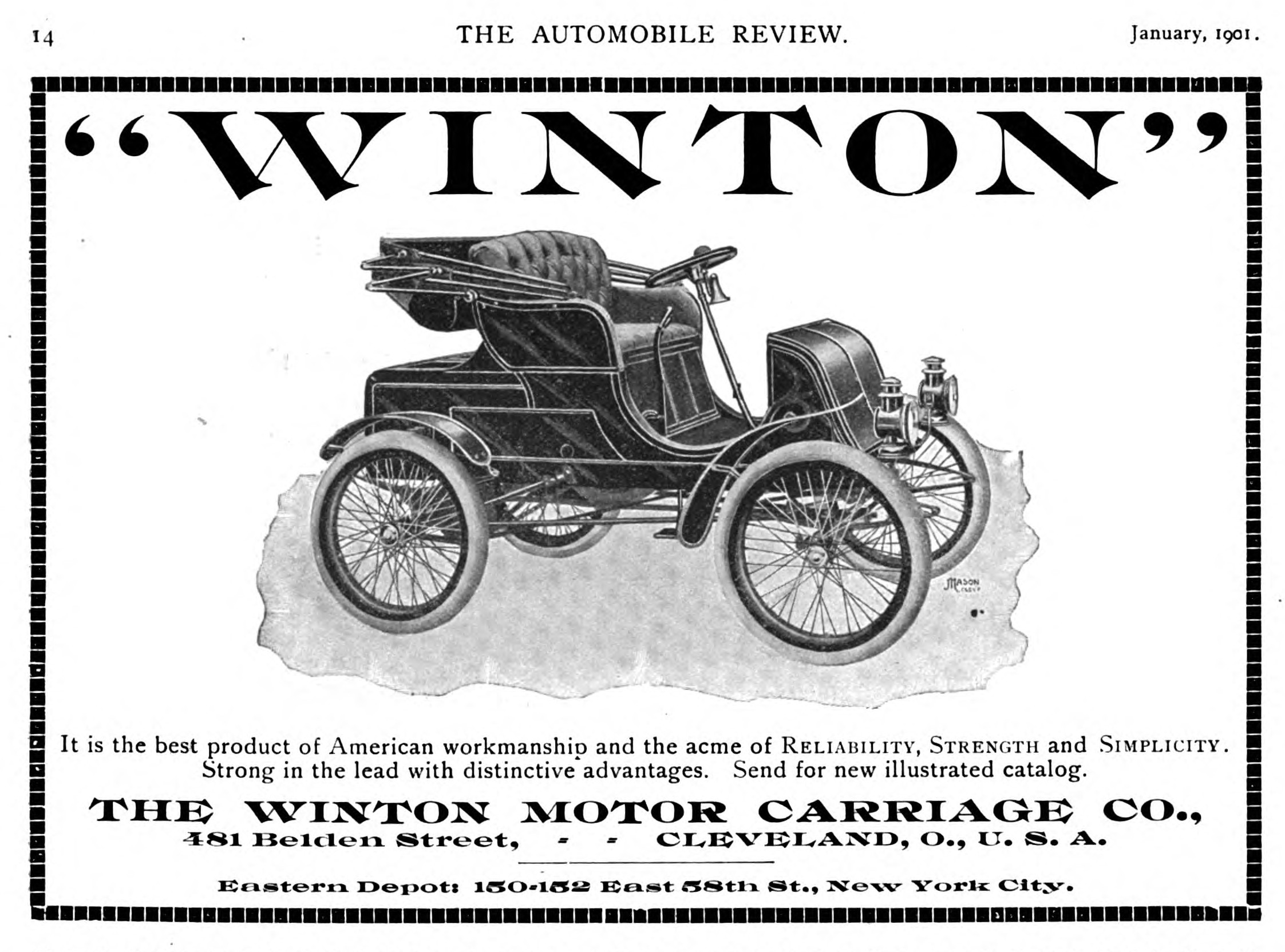
According to the tabloid newspaper, “The Indiana Weekly”, what made the race unique were the different types of automobiles that were being run (all of which were sold by Fisher). There was to be a Waverley electric car and a steam-powered Locomobile. Fisher himself would be driving a gasoline-powered car specially made by the Winton Automobile Company called the “White Flyer”.
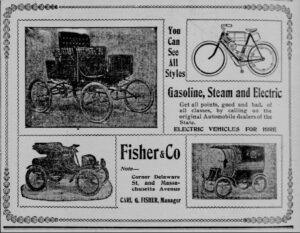
Gas, Steam, and Electric Automobiles – 1901 Indianapolis Journal
Evidently, the Waverley had speed issues, because it was given a 40-minute handicap when the race started at 5:30 that evening. The auto took two hours to reach Noblesville, so, even though it arrived at about the same time as the other vehicles, it was the third fastest car. Fisher and the Winton covered the course in the fastest time of 1 hour and 9 minutes. The Locomobile was second fastest at 1 hour and 26 minutes. Men on bicycles had been stationed south of Noblesville to notify the waiting crowd; the thought being that bicycles could travel faster than most cars of the time period. However, the cars outran the bicycles, and only the last cyclist was able to beat them into town when, as the newspaper said, “he ’scorched’ down the brick sidewalks when he heard the machines coming”.
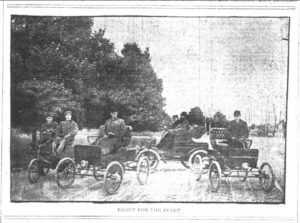
Endurance Race – 1901 Indianapolis News
According to the Noblesville Ledger, there were 400 people at the Houston Hotel (now the site of the Levinson Building at the northeast corner of 8th and Maple) waiting to see the finish. The electric car was so slow that the Ledger didn’t even realize that it was part of the race. They said “the time of both machines is considered remarkably good over the rough and dusty country roads”. After a short breather, the cars left to return to Indianapolis at 7:58. Fisher got to the finish line at 9:25, and the Waverley Electric got in at 10:15. The Locomobile had an accident on the way back and wasn’t able to finish.
Ten years later, Carl Fisher would be part of the establishment of another endurance race which would be known as the Indianapolis 500 Mile Race. He became quite wealthy but lost almost everything in the Great Depression. He lived his last days in a small cottage on Miami Beach. Still, before he died, he had left his mark on the nation, on Indiana, and, in a small way, on Hamilton County.