


By David Heighway, Hamilton County Historian
Transportation of goods to market is a crucial link in any business. Today, the price of fuel has a huge impact on the price of groceries in the supermarket. However, the process now is still much simpler than it was 175 years ago. When Hamilton County was first settled, most farmers were concerned with feeding their own families. After a few years though, they began to produce a surplus and began looking for markets.
In his history of Hamilton County written in 1901, Augustus Finch Shirts described early agricultural economics. His family had moved to the county in 1819, and he had grown up here. He said that after introduction of fanning mills into the county, farmers began to raise a surplus of wheat. However, there were no markets other than Cincinnati, Lawrenceburg, or Lafayette. The farmers would load twenty bushels of wheat into a wagon and drive for four or five days to get to the market, where they would be paid around forty cents a bushel for the wheat and spend three days driving home.
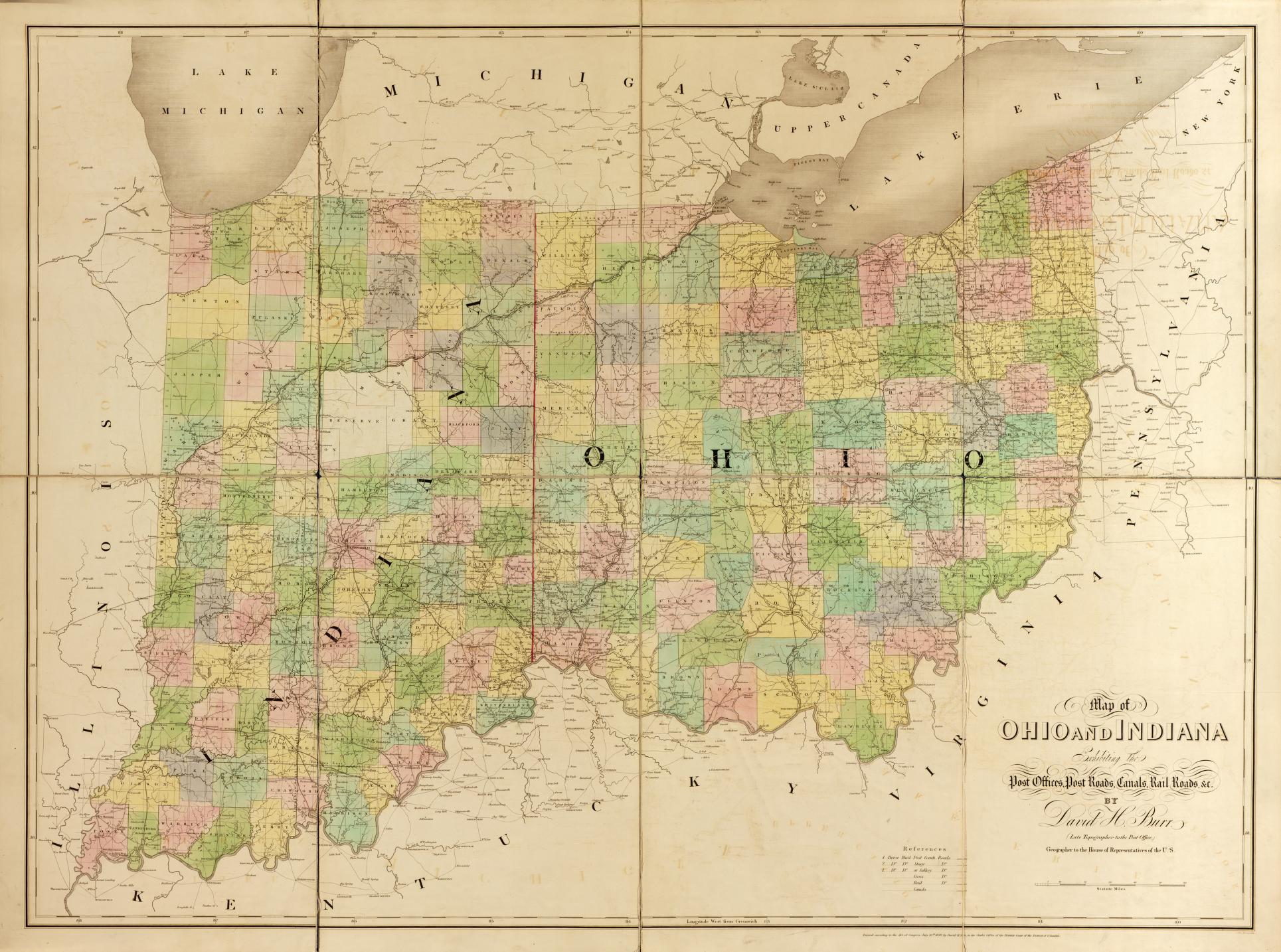
The 1939 American atlas, exhibiting the post offices, post roads, rail roads, canals, and the physical & political divisions of Indiana and Ohio in the United States of North America.
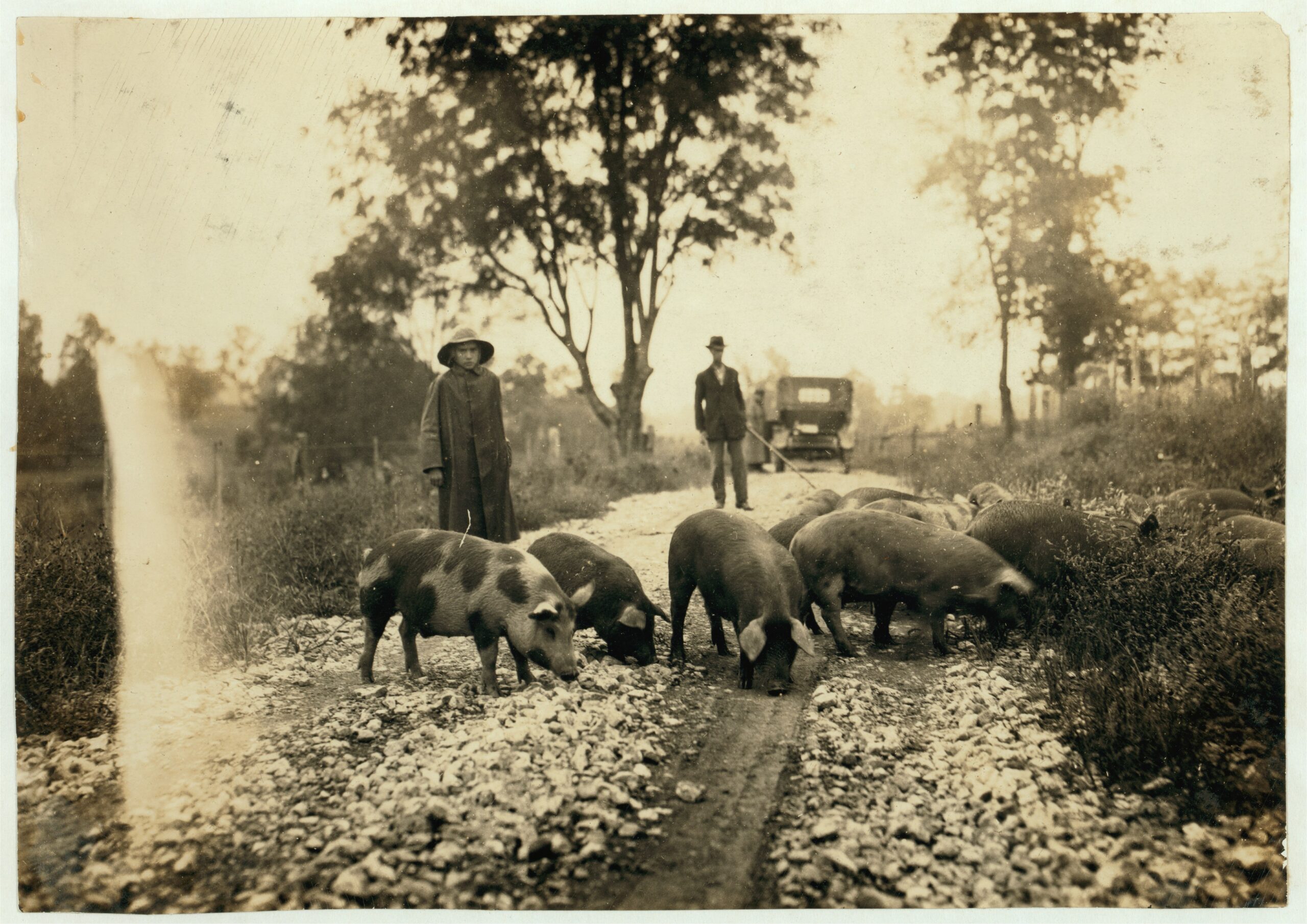
It was even more labor intensive to get hogs to market. Livestock surpluses started appearing after 1835. Local merchants would buy the hogs in the autumn, collect them together, and hire men to drive them to Cincinnati. In this case, “driving” meant walking the hogs all the way to Ohio with wagons used mostly just for supplies. Shirts described one drive that he participated in when he was a young boy.
We left Noblesville about the 3rd day of December, with ten hands and three teams. For two or three days we had fair weather and got along fairly well. It then began to rain and the roads soon became muddy. Some of the hogs traveled faster than others, so the hogs were divided into lots. The tired hogs would be placed in the wagons and hauled to the stopping place for the night. These tired hogs were lifted out of the mud and placed in the wagons by the hands in charge of the hindmost lot. After the rain set in these men would be at night wet to the skin. The men were kept on the road until dark and sometimes later. It frequently happened that after turning in at night the men were required to gather corn from the fields to feed the hogs that night, and the morning after. The hogs were usually fed about 4 o’clock in the morning and turned into the road at daylight. The process was continued from day to day until Cincinnati was reached, then the hands were turned loose with money enough to take them home. From twenty-one to twenty-two days were consumed in the trip. We wore the same suit of clothes all the time. At night we would dry them and the next morning rub the mud off and put them on. For my service I received 18 cents per day and board.
When the hogs reached Cincinnati, they would be sold for $1.50 to $1.75 per hundredweight. Cincinnati had become the nation’s chief hog packing center by 1835, with the nickname of “Porkopolis”.
The issues of transportation changed in 1851 with the completion of the railroad from Indianapolis to Noblesville. It would reach Peru in 1854. Hogs could now be put aboard railroad cars in Noblesville and be shipped straight to Madison, where they would be loaded onto boats for Cincinnati. Eventually, there would also be the Monon railroad which went straight to Chicago. Not only was it cheaper and easier to ship livestock and produce, you also didn’t have to wear the same suit of clothes for twenty-one days.