


By Anusha, Crossroads Discovery Center Intern

Image of Irven Armstrong taken from The Future
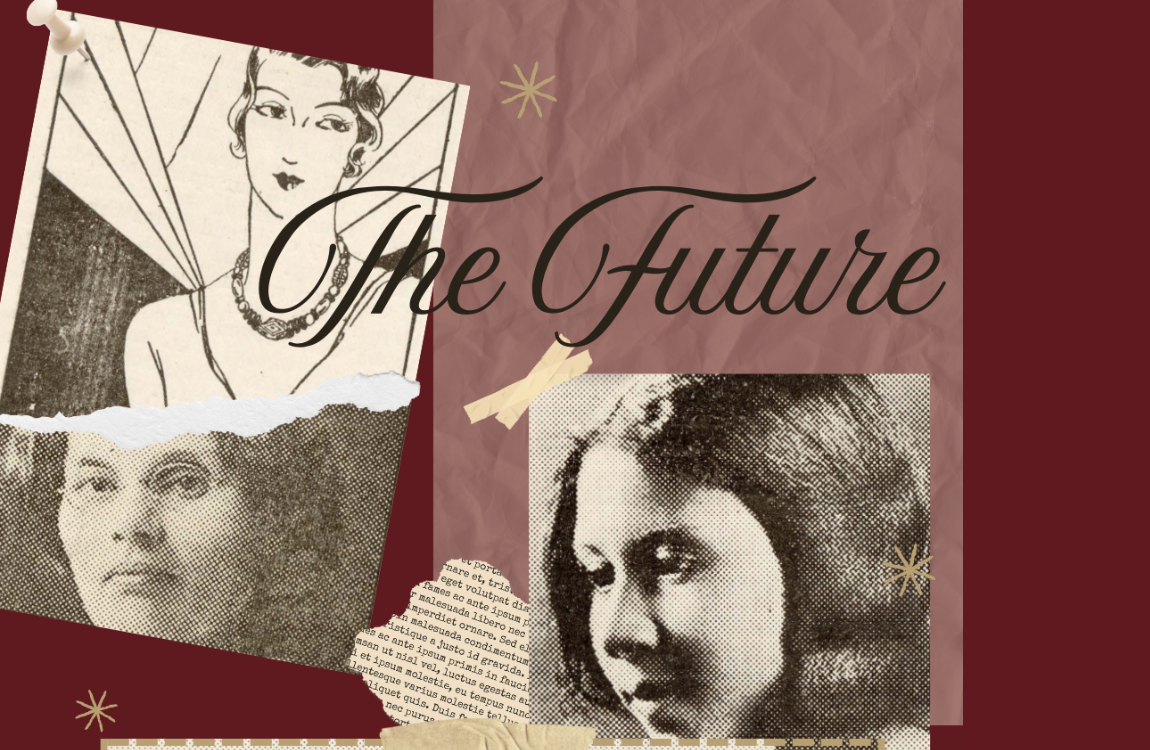
The Future collection, part of the Crossroads Discovery Center collection of digitized resources, contains three editions of the newspaper – published in June, July, and August of 1929. Based in Noblesville, The Future was the first African American newspaper of Hamilton County. It contained contributions from Olivia Roper and Irven Armstrong but was vastly composed of the writings of journalist Beatrice O’Neil, who also served as the publisher and head editor of the paper. The Hamilton East Public Library staff have already written about O’Neil and The Future, however for the release of the collection, new research about the life of Beatrice O’Neil was done and has been presented in this blog post.
Personal Life
Beatrice Clarabelle Edmonds was born to Mae Isabelle (Valentine) Edmonds of Indiana and Garland Winston Edmonds of Kentucky on February 7, 1894. Garland, as indicated by census records, worked at the Strawboard Factory in Noblesville. The Edmonds family lived in Noblesville by 1910, renting a home on South Eighth Street. Beatrice attended school up till the sixth grade and, by the age of sixteen, worked in the home of a family as a maid.
On January 3, 1917, she wed Thomas O’Neil (1893-1971), a WWI veteran. Beatrice and Thomas would later separate and divorce in late 1921 and remarry in August 1929. During their divorce, Thomas was court-ordered to pay $10 weekly to Beatrice, who maintained custody of the children. The couple had four children: Francis Edmond (1918-1945), Alois Isabelle (1920-1921), Garland Arnold (1922-1922), and Beatrice “Peony” (1926- ).
At just eleven years of age, Francis O’Neil served as an assistant to his mother in the July edition of The Future. The O’Neils lived in Noblesville, renting homes on East Hannibal Street and Walnut Street. By 1940, they had purchased 546 Chestnut Street as their home. On April 7, 1941, Beatrice O’Neil passed away at the age of 47. Her death came following a short week-long illness she developed the day of her mother’s funeral.
Career
Beatrice O’Neil began her work in journalism sometime around 1909, writing her first piece in the Noblesville Daily Ledger under the guidance of Jas. A. Colter, a local barber. Although census records indicate O’Neil as having no occupation after 1910, she was a reporter writing about the Black community in the Indianapolis Recorder, The Plaindealer, Freeman, Anderson Shining Star, and wrote columns in the Noblesville Daily Ledger until at least 1938. She had many accomplishments, even becoming the first state representative for the Recorder. At the Anderson Shining Star, O’Neil started the “Big Booster” program, edited the feature column “The Fireside,” and sold more copies of the paper than any other person in the state as an advertising agent.
Activism and Hobbies
Aside from her journalistic pursuits, O’Neil was an active member of the community and was particularly involved with the Bethel A.M.E. church. O’Neil was involved in the church choir and performed solo songs, as well as joint performances with the choir and its members. Alongside her husband, she directed the junior choir and accompanied the choir as the pianist. She was also fond of acting, organizing plays, and participating in them as an actress, singer, and musician. Her many hobbies also included baking, as she entered various competitions for pies and cakes throughout her life, taking home several prizes for them.
Her interests did not end at performing arts. O’Neil was present as a leader in charity and community work. She was the chairman of the Red Cross Drive and supported the foundation by writing articles to spread awareness and organizing different events and fundraisers. She was the Chairman of the Dorcas Missionary Society and wrote about missionaries in an edition of The Future. She was also focused on youth involvement and enrichment as the leader of the Busy Bee 4-H Club, which would have been a vital resource for African American girls to learn life skills, as many 4-H clubs at the time were segregated.
The Future
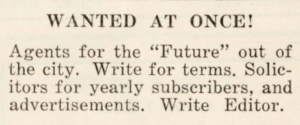
Job Openings Available at The Future, taken from the August edition
The first edition of The Future was sold on June 27, 1929. Each copy was priced at 5 cents, and Beatrice’s son, Francis, sold 76 of the 156 initial copies. Beatrice wrote in the Daily Ledger that, combined with advertisements and the support of boosters, no debts were incurred for the publication of the paper, stating that it had “paid for itself.” For the July edition, 600 copies were printed, a number significantly larger than the estimated number of African American people residing in Hamilton County (373 in 1930), suggesting that it was purchased by people of all backgrounds.

Image of Lyman Hyzer taken from The Future
Beatrice O’Neil called the newspaper a “clean newsy little paper endeavoring to build up pride for its hometown and its citizens, keeping in touch with the affairs of interest to the people” and stated that the newspaper was for “everyone” and would serve to “unite relatives and friends.” The Future did indeed unite, with reports of editions being sent to New York where it was received with acclaim by Lyman Hizer. The paper received praise from Indianapolis illustrator Ernest M. Jones, who, upon receiving a copy of the paper from a friend, said that the paper “has a real future itself. It is very nice.”
However, how long the future of the paper would be is unclear. While it is confirmed that no September edition was published, there are notes in the Daily Ledger stating that an October edition was to be published. Additionally, a November 1929 article states that Beatrice had just recovered from a weeks-long illness and would resume the publication of The Future. However, no further discussion of the aforementioned October edition or any other consequent ones could be found.
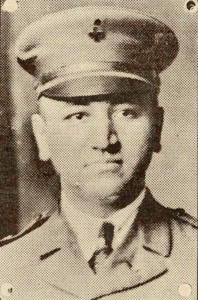
Image of Dr. Carl G. Roberts taken from The Future
The three editions of The Future available at the Crossroads Discovery Center reflect the dedication to the church and community service held by Beatrice O’Neil. The newspaper includes hymns, social happenings within the community, local news, advertisements from nearby companies and shops, as well as articles focused on religion, racial inequality, and local history. The Future includes a primary account of the Roberts Settlement, authored by one of its ministers, Rev. C. W. Roberts, as well as details about the settlement’s history authored by noted surgeon, Dr. Carl G. Roberts. The Roberts Settlement was formed by Hamilton County’s African American pioneers in 1835.
The Future can be viewed online, and Beatrice O’Neil can be found in the Crossroads Discovery Center Coloring Book.
Sources:
Celebrating Hamilton County, Indiana- 200 Years of Change (Page 103)
Noblesville Daily Ledger
US Census Records
Visit Hamilton County
Wikipedia
About the Author
 Anusha is currently a senior at Fishers High School. She is an intern at the Hamilton East Public Library’s Crossroads Discovery Center in Noblesville, where she works on research and archival organization. She is interested in history and reading and plans to major in Economics in the Fall.